
TL;DR
- If you’re VAT-registered in Sri Lanka, your sales invoices must be tax invoices in the format the Inland Revenue Department (IRD) prescribes. If you’re not registered, you issue a commercial invoice and must not charge VAT.
- A revised tax invoice format was gazetted, postponed twice, and applies from 1 October 2026 under Gazette Extraordinary No. 2500/106.
- Key requirements include the heading “TAX INVOICE”, both parties’ TINs (the buyer’s where registered), a structured serial number, delivery date and place of supply, values in whole rupees, the total in words and the payment method.
- VAT is currently 18%. The registration threshold remains Rs. 60 million a year, after a proposal to lower it was dropped.
- Free templates below, plus what to change if your billing system still prints the old layout.
Commercial invoice vs tax invoice
| Commercial invoice | Tax invoice | |
|---|---|---|
| Who issues it | Businesses not registered for VAT | VAT-registered businesses |
| Shows VAT? | No, never | Yes, value before VAT, VAT amount and total |
| Format | Your own, with sensible standard details | Prescribed by the IRD |
| Lets the buyer claim input VAT? | No | Yes, if it meets the requirements |
If a VAT-registered customer buys from you, they’ll check your tax invoice carefully, because an invoice that doesn’t meet the rules can cost them their input VAT claim. That makes the format a customer service issue, not just a compliance one.
The revised tax invoice format
The IRD’s revised format was first set for 1 January 2026, then moved twice; it now applies from 1 October 2026, according to Comarch’s summary of Gazette No. 2500/106. The requirements, as set out in the Daily FT’s explainer, include:
| Field | Requirement |
|---|---|
| Heading | “TAX INVOICE” displayed prominently |
| Supplier details | TIN, name, address and telephone number |
| Purchaser details | Name, address and contact details, plus TIN if VAT-registered |
| Serial number | In the structured format the IRD specifies (up to 40 characters, no spaces) |
| Dates | Invoice date and date of delivery |
| Place of supply | Where the goods or services are supplied |
| Description | Goods or services, with quantity or volume |
| Values | Value before VAT, VAT amount and total including VAT, in whole rupees |
| Total in words | The total amount written out |
| Payment method | Cash, bank transfer, cheque, card, mobile or online |
The original goes to the buyer and the supplier keeps a copy marked “Duplicate”. Keep records for at least five years. Check the gazette and the latest IRD guidance before you finalise your layout, because the details matter.
A worked example
| Description | Qty | Unit price (Rs.) | Value (Rs.) |
|---|---|---|---|
| Printer toner cartridges | 20 | 8,450 | 169,000 |
| A4 paper, 80gsm (box of 5 reams) | 30 | 6,200 | 186,000 |
| Value before VAT | 355,000 | ||
| VAT at 18% | 63,900 | ||
| Total including VAT | 418,900 |
Total in words: Four hundred and eighteen thousand nine hundred rupees only. Payment method: bank transfer.
Under the revised format, amounts are shown in whole rupees, so set your system to round correctly rather than printing cents.
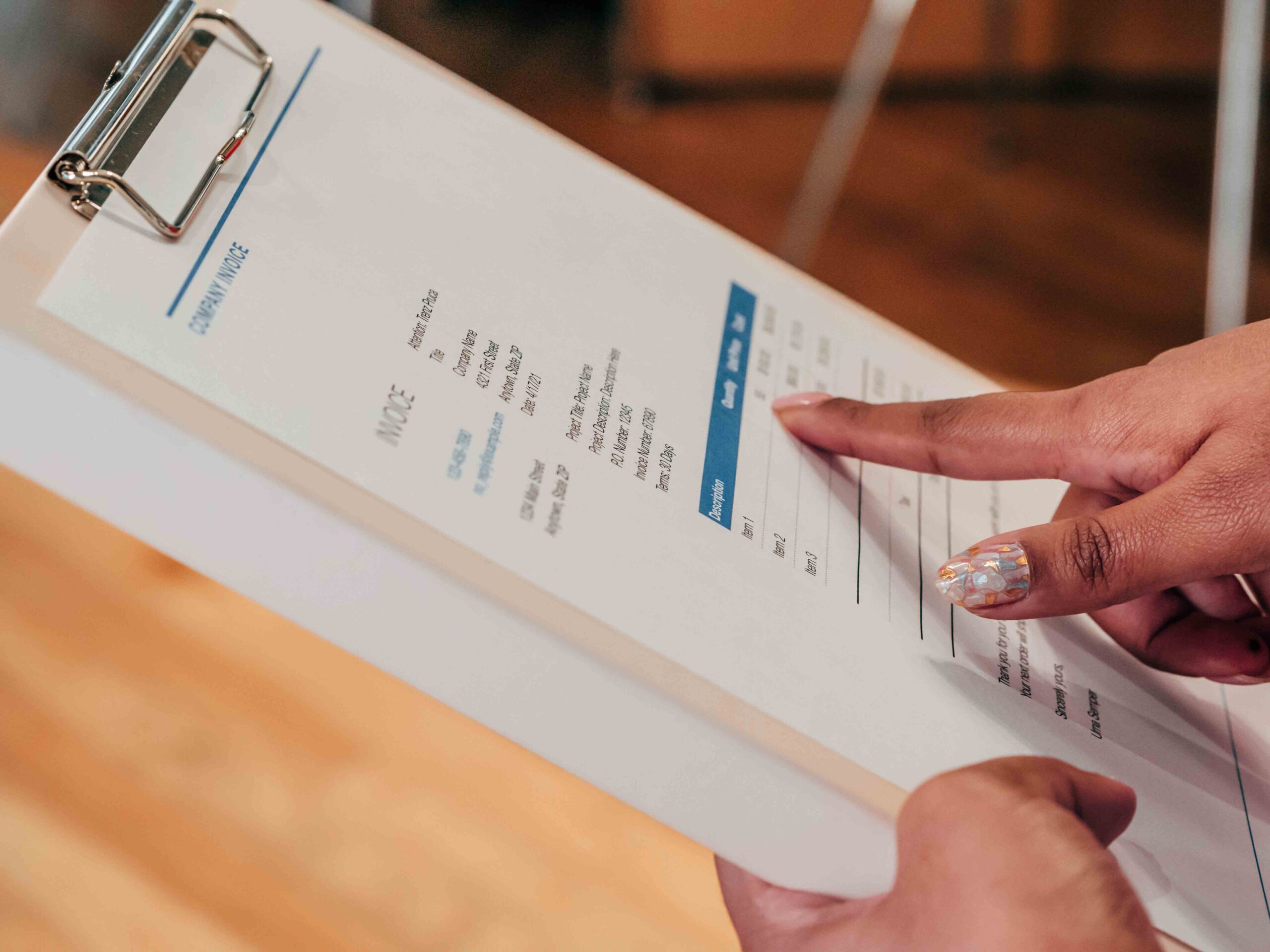
VAT tax invoice and non-VAT commercial invoice formats.
[Editor note: insert download block here. Invoice templates, xlsx and docx. Tax invoice layout with all required fields and VAT at 18%; commercial invoice layout for non-registered businesses; automatic total-in-words.]
What to include on any invoice
Even if you’re not VAT-registered, a good commercial invoice includes your business details, the customer’s details, a unique invoice number, the date, item descriptions, quantities and prices, the total, payment terms and bank details. Quote the customer’s purchase order number if they gave one; their accounts team will look for it.
Common invoice mistakes
- Charging VAT when you’re not registered. It’s not allowed, and the customer can’t claim it.
- Old layouts. Billing software that still prints the pre-October 2026 format.
- Missing buyer TIN. For VAT-registered buyers, this can block their input claim.
- Gaps in numbering. Cancelled invoices should be kept and marked, not deleted.
- Forgetting withholding tax. Some customers will deduct WHT when they pay you. Our withholding tax guide explains when.
Let the system handle the format
IRD formats change, and every change means updating templates, numbering rules and rounding across every invoice your business prints. In Blue Lotus 360, tax invoices are generated from the sales order with the required fields, sequential numbering and VAT calculated automatically, and format updates are applied centrally rather than on dozens of spreadsheets. With the SVAT scheme now abolished, accurate VAT invoicing matters even more for refunds and input claims. Our accounting software guide covers what else to look for.
Talk to our team about compliant VAT invoicing in Blue Lotus 360.
FAQs
What is the VAT rate in Sri Lanka?
The standard rate is currently 18%. Check the IRD for any changes before you finalise your pricing or invoice templates.
When does the new tax invoice format apply?
From 1 October 2026, after two postponements, under Gazette Extraordinary No. 2500/106.
Can a non-VAT registered business charge VAT?
No. Only registered businesses can charge VAT, and only they can issue tax invoices.
What is the VAT registration threshold in Sri Lanka?
Rs. 60 million a year. A proposal to lower it to Rs. 36 million was dropped.
Do invoice amounts need to show cents?
Under the revised tax invoice format, values are shown in whole rupees.