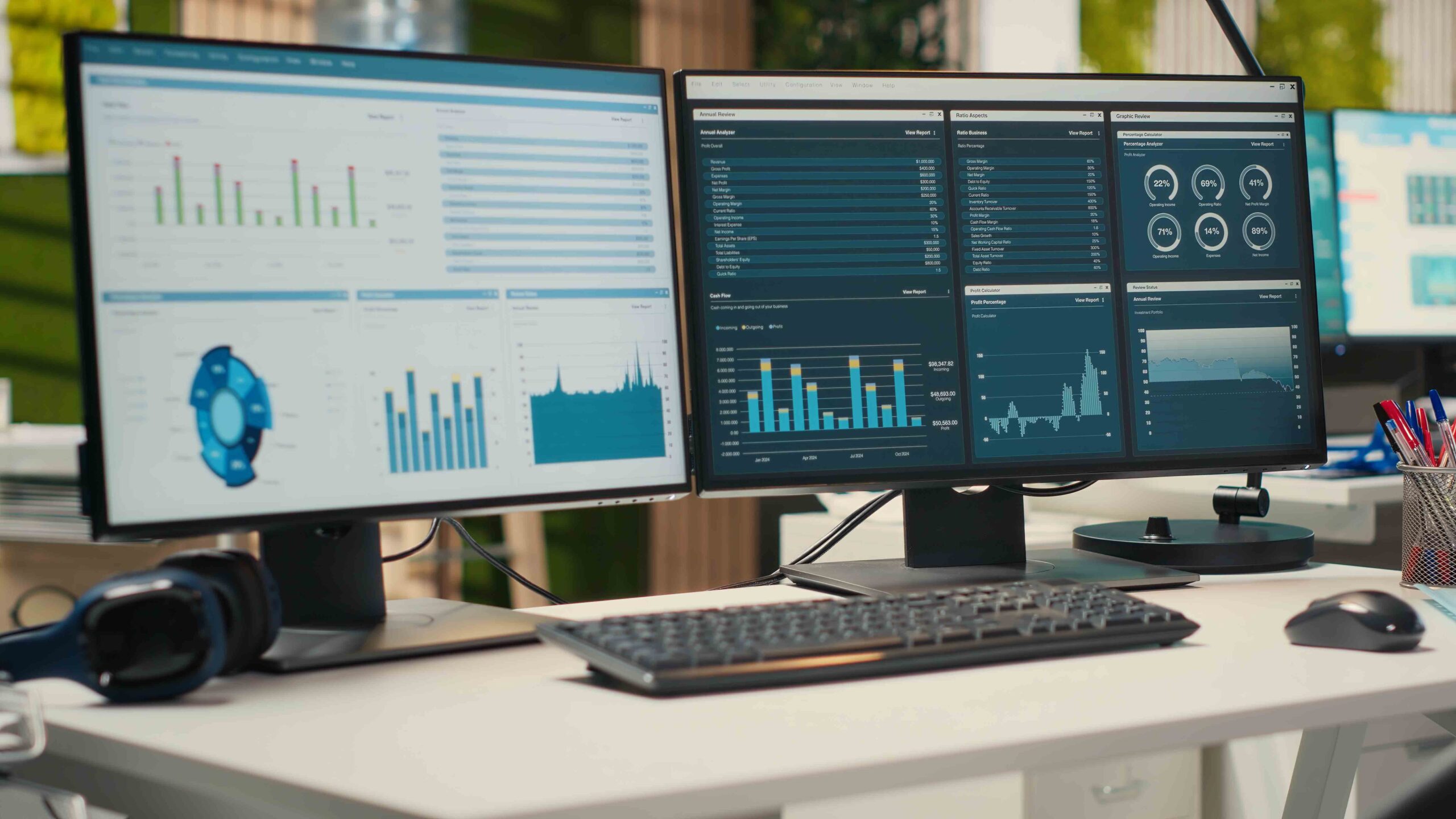


For many UK SMEs, ERP selection starts with features.
Finance. Inventory. Purchasing. Reporting. Payroll. CRM. Dashboards.
But once the shortlist gets serious, the decision usually shifts.
The real question becomes: can this ERP support the way your business operates, the way your team works, and the rules you actually have to follow?
That is where three areas matter far more than many buyers expect: compliance, support hours, and data residency.
At Blue Lotus 360, we see this often in the UK market. Businesses do not usually regret ERP because the demo looked weak. They regret it because key questions were left until too late: Will this help us stay compliant? Who supports us when something breaks outside normal office hours? Where is our data actually stored, accessed, and backed up? Blue Lotus 360’s UK positioning reflects those concerns directly, with its cloud ERP pages highlighting integrated workflows, secure access, automatic updates, dedicated local support, and 24/7 customer support.
Here is what UK SMEs should really look at before making an ERP decision.
ERP selection for UK SMEs is no longer just a software question
UK SMEs are operating in an environment where digital recordkeeping, reporting discipline, privacy controls, and secure access all matter more than they did a few years ago. UK data protection is governed by the UK GDPR and the Data Protection Act 2018, and the ICO’s accountability guidance makes clear that organisations are expected not only to comply, but to be able to demonstrate how they comply.
That is why ERP selection should not be reduced to “which system has the most features for the lowest monthly cost?” A cheaper or broader system can still be the wrong choice if it makes compliance harder, support slower, or data governance less clear.
1. Compliance: your ERP should help you stay organised, traceable, and audit-ready
For UK SMEs, compliance does not mean the same thing in every business.
For some, it is mainly about financial records, VAT, approvals, and audit trail. For others, it also includes payroll controls, customer data handling, operational records, stock traceability, or industry-specific requirements.
But the common principle is simple: your ERP should make compliance easier, not more manual.
That matters because UK company obligations still depend on reliable recordkeeping. Companies House says every company must keep accounting records, whether trading or not, and if the company deals in goods those records must include stock statements, stock-taking records, and statements of goods sold and purchased outside ordinary retail trade. It also says all companies must file annual accounts with Companies House.
For many SMEs, that means an ERP should support:
- accurate financial records
- audit trails and approval history
- stock records and inventory movement visibility
- role-based permissions
- reliable reporting
- secure document and transaction history
- easier preparation for filings, reviews, or audits
If the system cannot clearly show who changed what, when it changed, and why it changed, that is not a small issue. That is a control weakness.
At Blue Lotus 360, this is why our UK ERP positioning consistently focuses on integrated workflows, real-time visibility, financial control, and compliance-ready reporting rather than just standalone modules. Our own UK financial management content also frames ERP as a way to automate accounting, payroll, reporting, and budgeting in one environment, with audit-ready reporting and UK tax/HMRC alignment presented as core benefits for SMEs.
A practical compliance question UK SMEs should ask
Do not just ask, “Is the ERP compliant?”
Ask:
- How does it handle approvals?
- How does it support audit trail?
- Can we trace stock, pricing, and financial changes?
- How are user permissions controlled?
- What records can we export if we need them?
- How does it support our tax and reporting processes?
- What happens if we are reviewed, audited, or need to prove a transaction history?
Those questions usually reveal more than a feature checklist ever will.
2. Support hours: SMEs should buy the support model, not just the software
Support is one of the most underestimated parts of ERP buying.
Many SMEs assume support means a helpdesk email, a ticketing system, and maybe a callback the next day.
But that is not enough for businesses that trade across longer hours, close month-end under pressure, run warehousing or fulfilment operations, or serve customers outside a simple 9-to-5 pattern.
This is why support hours matter.
If your team works late at month-end, processes weekend orders, runs multi-branch retail, or needs issue resolution before the next trading day, then “business hours support” may be too narrow for your real operating model. That is especially true for SMEs, where a single unresolved ERP issue can affect invoicing, stock visibility, order handling, or management reporting across the business.
Blue Lotus 360’s UK site makes support positioning explicit: the main UK pages refer to dedicated local support and personalised assistance, and the UK contact page states that customer support is available 24/7.
That matters because support quality is not only about speed. It is also about relevance.
A support team that understands UK trading realities, UK SME workflows, and local reporting expectations will usually be more useful than a generic global queue that responds eventually but lacks business context.
What to ask about ERP support hours
When comparing ERP providers, ask:
- What are your actual support hours?
- Is support truly 24/7, or only for critical incidents?
- What counts as “critical”?
- Do you offer UK-based or UK-aligned support?
- How are month-end, payroll, or trading-day issues prioritised?
- What is the escalation path?
- Do implementation and post-go-live support come from the same team?
- How quickly do you respond outside normal office hours?
This is where many SMEs uncover a gap between the sales promise and the operating reality.
3. Data residency: this is more nuanced than “is the server in the UK?”
Data residency has become a bigger topic in ERP buying, but it is also one of the most misunderstood.
Many SME buyers assume the right question is simply: “Is our data stored in the UK?”
Sometimes that matters. But on its own, it is not enough.
The more useful question is: where is the data stored, where can it be accessed from, where can it be replicated or backed up, and what happens when support, integrations, or global services are involved?
The UK legal position is more nuanced than many buyers think. UK GDPR and the Data Protection Act 2018 govern personal data use in the UK, but the ICO’s guidance on international transfers makes clear that organisations need to consider when international transfer rules apply and how transfers are handled. In other words, compliance is not simply about keeping everything physically in one country. It is about lawful, well-governed processing and transfer arrangements.
The NCSC takes a similarly practical view in its cloud security principles. It says organisations should consider physical location and legal jurisdiction, and be confident they know where their data is and who can access it, including overlooked data such as logs, credentials, configuration data, and derived metadata.
That is the real issue for ERP buyers.
Data residency is not the same as compliance
A vendor can say “your data is in-region” and still leave important questions unanswered.
For example:
- Are backups stored in the same geography?
- Can support teams outside that geography access the data?
- Do add-ons or integrations move data elsewhere?
- Are logs or support artifacts stored separately?
- What happens in disaster recovery scenarios?
- What does the contract say about subprocessors and cross-border access?
Microsoft’s current Dynamics 365 documentation is a useful example of this nuance. It states that customer data is stored in the selected Azure geographic location, but also notes exceptions where data may be accessed or transferred for support, troubleshooting, legal requirements, global services, optional integrations, or connected external services. Microsoft’s Business Central sovereignty guidance also says data residency means customer data is stored in the environment’s assigned Azure geography.
That does not make the platform weak. It simply shows why SMEs should not stop at the phrase “UK hosting” or “EU hosting”.
They need the fuller picture.
4. What UK SMEs should check on data residency before choosing ERP
A good ERP selection process should include direct questions such as:
- Where is production data stored?
- Where are backups and disaster recovery copies stored?
- Where are logs and support files stored?
- Which subprocessors handle our data?
- Can support staff outside the UK or EEA access our environment?
- What safeguards apply if data is accessed internationally?
- Which integrations can move data out of region?
- Can we choose or confirm our hosting geography?
- What happens if we later need stronger residency controls?
These questions matter whether you are evaluating a specialist SME ERP, a broader cloud ERP, or a Microsoft-based environment.
5. Compliance, support, and data residency should be evaluated together
One of the biggest mistakes SMEs make is treating these as separate topics.
They are not separate.
They overlap in real life.
For example:
- A finance issue becomes a support issue at month-end.
- A support intervention may involve access to customer data.
- A data access model affects privacy governance.
- A weak permissions model becomes a compliance risk.
- A slow support response can delay invoicing, reporting, or payroll processing.
That is why ERP selection should look at these areas together as part of operational resilience.
An ERP that looks strong on paper but creates uncertainty around support or data handling can become a long-term management problem.
6. Why this matters even more in 2026
UK SMEs are under increasing pressure to modernise financial and operational processes. HMRC says sole traders and landlords with total annual income over £50,000 are required to use Making Tax Digital for Income Tax from 6 April 2026, and compatible software is part of that process.
Not every SME buyer will be directly affected by that rule in the same way, especially limited companies evaluating broader ERP rather than tax-only software. But the direction is clear: recordkeeping, submission processes, digital controls, and software readiness are becoming more central, not less.
That is another reason why ERP selection should focus on long-term fit, not just immediate functionality.
What a better ERP selection mindset looks like
For UK SMEs, the smarter buying question is not: “Which ERP has the most modules?”
It is: “Which ERP gives us the control, support, and confidence to scale without creating avoidable risk?”
At Blue Lotus 360, that is how we think about ERP in the UK. Our own positioning is built around integrated cloud ERP, secure anytime access, automatic updates, dedicated local support, and 24/7 customer support, because those are not side benefits. For SMEs, they are part of what makes the platform usable in real business conditions.
Final thoughts
ERP selection for UK SMEs should never be based on features alone.
The stronger decision usually comes from asking three harder questions early:
- Will this system help us stay compliant?
- Will support be there when our business actually needs it?
- Do we understand where our data lives, who can access it, and how it is governed?
Those questions may feel less exciting than dashboards and automation demos.
But they are often the ones that determine whether the ERP becomes a growth platform or a long-term frustration.
At Blue Lotus 360, we believe UK SMEs scale better when ERP is not only functional, but dependable — operationally, commercially, and from a governance perspective. That is why compliance, support hours, and data residency should be part of the selection conversation from day one.