
TL;DR
- An HS code is the number Customs uses to identify a product. It decides which duties, levies and import controls apply.
- The first six digits are international (the World Customs Organization’s Harmonized System). Sri Lanka adds national digits in its own Customs tariff.
- Sri Lanka’s tariff follows the HS 2022 edition and is published chapter by chapter on the Sri Lanka Customs website.
- Wrong codes lead to overpaid duty, delayed clearance, penalties and wrong product costs. Store the correct code against each item in your system.
What is an HS code?
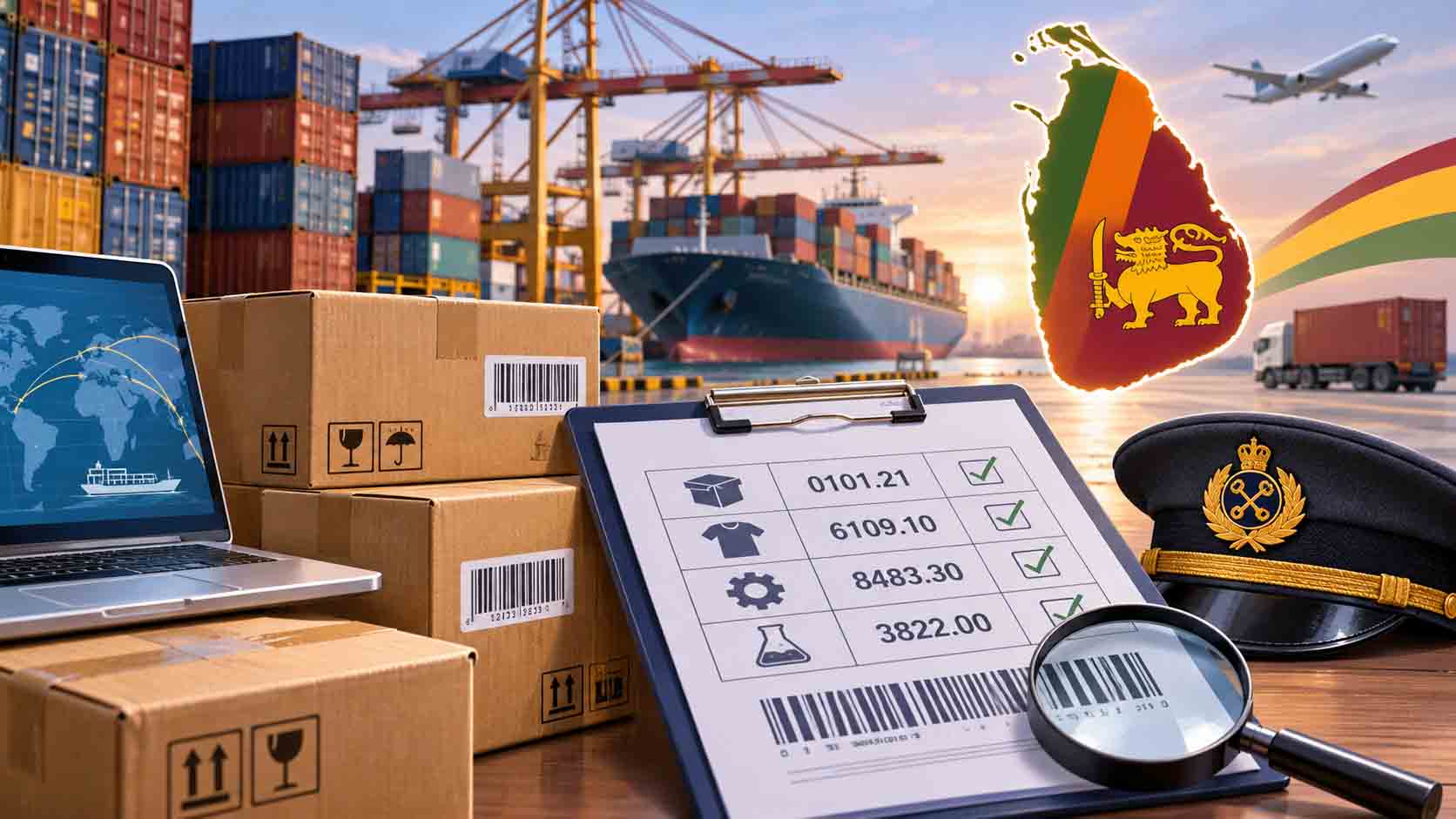
Walk through the Colombo port and every container tells the same story in numbers. Tea going out, machinery coming in, fabric for the apparel factories, spare parts for the trading houses along Pettah. Each of those goods carries an HS code, the number Customs uses to decide what it is and how it’s taxed.
HS stands for Harmonized System, a product classification maintained by the World Customs Organization and used by most countries. In Sri Lanka, it’s the backbone of the Customs tariff: it sets the duties and levies you pay on imports, the controls that apply, and the statistics behind the country’s trade figures.
How an HS code is structured
| Digits | Level | Example: cotton T-shirts |
|---|---|---|
| 2 | Chapter | 61: Knitted or crocheted apparel |
| 4 | Heading | 61.09: T-shirts, singlets and vests, knitted |
| 6 | Subheading (international) | 6109.10: Of cotton |
| More | National subdivision | Added by Sri Lanka Customs in the national tariff |
The first six digits are the same in every country using the HS. The extra digits are national, so always use the full Sri Lankan code on your Customs declaration, not just the six digits your overseas supplier quotes.
Sri Lanka Customs publishes its tariff, based on HS 2022, chapter by chapter on its website, for example Chapter 61 (knitted apparel).
How to find the right HS code
- Describe the product precisely. What is it made of, what does it do, how is it presented?
- Find the chapter. Use the section and chapter titles in the tariff to narrow down.
- Read the section and chapter notes. They often decide classification, and they override the headings.
- Choose the heading and subheading that describe the product most specifically.
- Pick the national subdivision in the Sri Lankan tariff.
- Check with your broker or Customs if you’re unsure. For high-value or recurring imports, a wrong guess is expensive.
Why the code changes what you pay
The HS code decides which taxes apply at import. Depending on the product, these can include Customs Import Duty, CESS, the Ports and Airports Development Levy (PAL), Social Security Contribution Levy (SSCL), VAT and, for some goods, excise duty. Rates differ widely between codes, and the tariff is being reformed, including moves to phase out CESS, as discussed in a Ceylon Chamber of Commerce paper.
That’s why two similar products can carry very different landed costs. Always check the current rates in the tariff and gazettes rather than relying on last year’s invoice.
Common classification mistakes
- Using the supplier’s code. Their country’s national digits don’t apply here.
- Classifying by use rather than description. The tariff usually goes by what a product is, not what you’ll use it for.
- Ignoring section and chapter notes. These settle many disputes.
- Sets and kits. Mixed sets have their own rules.
- Parts and accessories. Parts can fall under different headings from the machine they belong to.
- Old codes. HS editions change, and so do national subdivisions.
The consequences range from overpaid duty to held shipments, penalties and wrong product pricing.
Exporting? HS codes matter too
Exporters need the right code on export declarations and certificates of origin, especially when claiming preferential rates under trade agreements. Buyers abroad will use the six-digit code to check their own import duties, so getting it right helps your customers too.
Keeping HS codes in your item master
The best place for an HS code is your item master, not a broker’s email. When the code lives against each item:
- Purchase orders and import costing pick up the right duties and levies automatically.
- Landed cost per item is accurate, so selling prices are too.
- Customs documents and broker instructions use the same code every time.
- Reports show import spend and duty by product and tariff line.
Blue Lotus 360 is a cloud ERP used by Sri Lankan importers, traders and distributors to manage procurement, inventory, sales and finance in one place. Our guide to ERP for trading and distribution explains how item data, import costing and stock come together.
Getting classification right
An HS code looks like a small detail, but it drives duty, clearance time and product cost. Classify carefully, use the full Sri Lankan code, keep it in your item master and recheck it when the tariff changes.
Talk to our team about managing imports, landed costs and stock in one system.
FAQs
What is an HS code in Sri Lanka?
A product classification number based on the international Harmonized System, with national digits added in the Sri Lanka Customs tariff. It decides the duties, levies and controls that apply.
Where can I find Sri Lanka HS codes?
Sri Lanka Customs publishes its tariff, based on HS 2022, chapter by chapter on its website. Your customs broker can also help.
How many digits does an HS code have?
The international part has six digits. Sri Lanka adds national subdivisions, so use the full Sri Lankan code on declarations.
Why does the HS code affect import costs?
Each code carries its own combination of duty and levies, such as Customs Import Duty, CESS, PAL, SSCL and VAT, so the code directly changes landed cost.
What happens if I use the wrong HS code?
You may overpay or underpay duty, face delays or penalties, and price your products on the wrong landed cost.